An electric mini bus is more than just a “green” vehicle, it is a powerful tool for cutting fleet operating costs, stabilising budgets, and future-proofing transport operations. By lowering fuel spend, reducing maintenance requirements, and unlocking long-term savings, electric mini buses are rapidly becoming the smart choice for fleet owners and mobility managers.
For fleet operators in India and globally facing rising fuel prices, frequent engine servicing, and tighter emission regulations, shifting to commercial electric buses and mini bus fleets is now a strategic business decision, not just a sustainability initiative.
Why Operating Costs Matter for Fleet Owners?
For fleet owners, operating costs directly impact profitability, cash flow, and long-term business viability. Every rupee spent on fuel, repairs, and breakdowns affects margins, pricing, and competitiveness.
Key cost pressures most fleets face today include:
- Rising fuel prices: Diesel and petrol costs are volatile and often trend upward, making budgeting difficult and squeezing margins.
- Increasing vehicle maintenance costs: Combustion-engine vehicles have hundreds of moving parts that wear out, break down, and require regular servicing.
- High fleet operating expenses: Insurance, driver wages, tolls, parking, fuel, and maintenance together create a heavy cost structure.
- Frequent engine servicing: Oil changes, filter replacements, clutch and gearbox repairs add recurring costs and reduce vehicle utilisation.
- Stricter emission regulations: Regulatory pressure to reduce carbon and particulate emissions is growing, adding compliance costs for ICE fleets.
- Uncertainty about EV adoption: Many operators know EVs can reduce operating costs but are unsure about real-world performance, charging, and ROI.
- Pressure to reduce transportation costs: Schools, corporates, and institutions demand more economical mobility solutions without compromising safety or comfort.
In this context, any solution that can reduce fleet operating expenses meaningfully and predictably deserves serious attention. This is where electric mini buses stand out.
What Is an Electric Mini Bus?
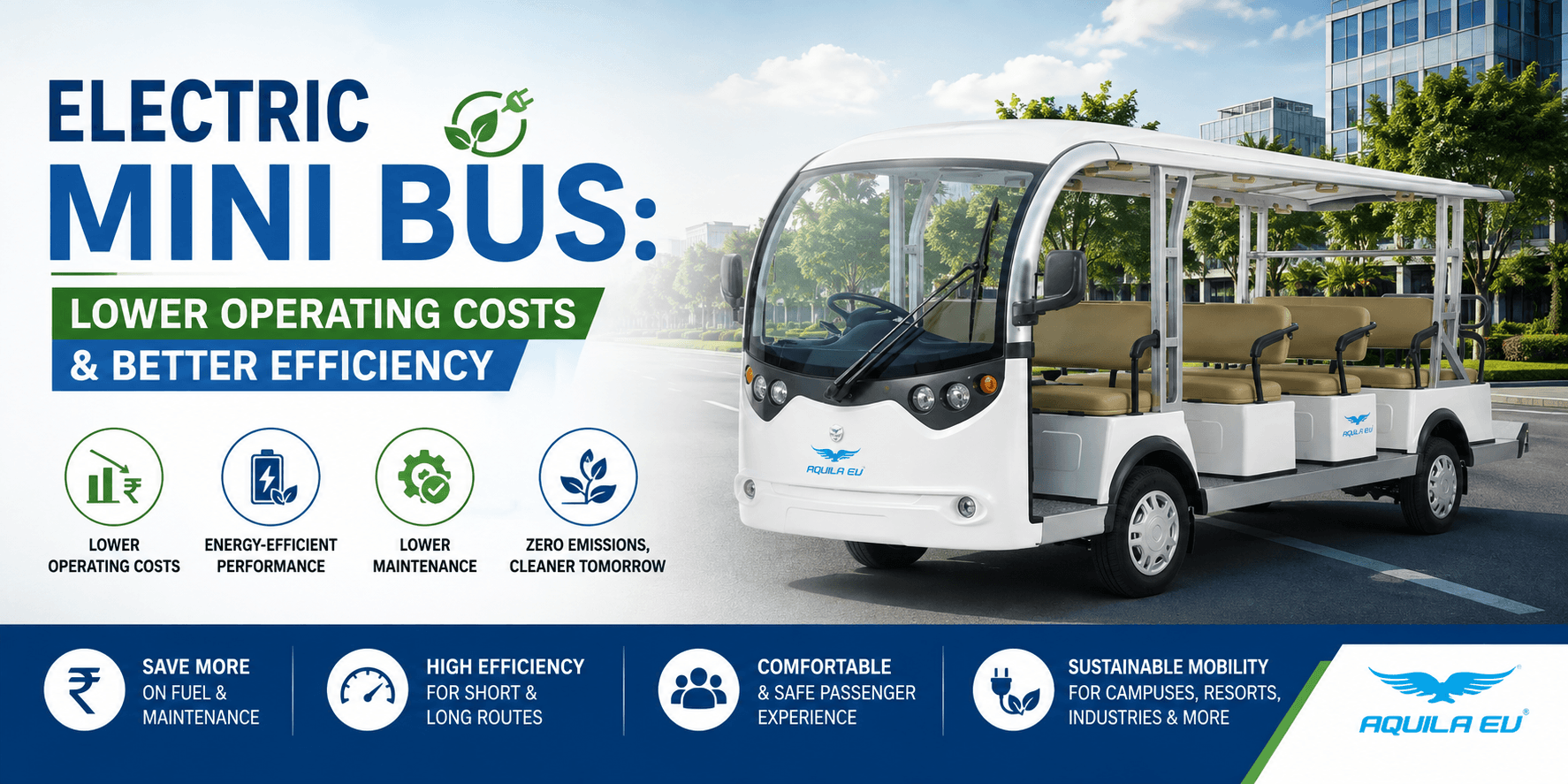
An electric mini bus is a compact, battery-powered bus typically designed to carry 8–20 passengers for short- to medium-distance travel within campuses, industrial parks, residential communities, resorts, schools, and corporate facilities.
Unlike conventional diesel mini buses, an electric mini bus:
- Uses lithium-ion batteries instead of fuel tanks
- Operates via an electric motor instead of a combustion engine
- Produces zero tailpipe emissions, reducing local air pollution
- Runs almost silently, offering a more comfortable ride
Electric Mini Buses Are Ideal For:
- School transport within or around campuses
- Corporate mobility for employee movement in tech parks and large offices
- In-campus shuttle services at factories, airports, railway stations, and temples
- Resort and hotel mobility for guests and staff
- Last-mile connectivity solutions in gated communities and institutional complexes
For fleet owners and EV fleet managers, these vehicles provide high utilisation, predictable running costs, and a clear route to fleet electrification.
How Electric Mini Buses Reduce Fuel Costs?
Fuel spend is usually the single largest variable cost in a commercial transport operation. Electric mini buses dramatically reduce this expense by replacing diesel or petrol with electricity.
1. Lower Energy Cost per Kilometre
In most regions, the cost per kilometre of electricity is significantly lower than diesel or petrol. While exact numbers vary, fleets typically see:
- 30–60% reduction in “fuel” cost per kilometre compared to diesel mini buses
- More stable energy pricing over time compared to volatile fuel markets
When an electric mini bus is charged from a standard or fast charger, the energy cost becomes more predictable, aiding budgeting and long-term planning.
2. Better Energy Efficiency
Electric drivetrains convert a higher percentage of stored energy into actual movement. This means:
- Higher energy efficiency compared to combustion engines
- Less wasted energy as heat and noise
- Improved performance in stop-start conditions common in campus and urban operations
For fleet owners, this translates directly into electric fleet cost savings and lower EV operating costs per trip.
3. Opportunity Charging and Load Management
Electric mini buses can be charged:
- During off-peak hours, when electricity tariffs are lower
- Using scheduled charging, aligning with operational breaks
- From renewable sources (solar), further reducing effective energy costs over time
By optimising charging schedules, EV fleet managers can maximise cost savings while maintaining high uptime.
Lower Maintenance Requirements
Traditional mini buses powered by diesel engines demand regular and often costly maintenance. Electric mini buses simplify and reduce maintenance significantly.
1. Fewer Moving Parts
An electric motor has far fewer moving parts than a combustion engine. As a result:
- No engine oil changes
- No fuel filters, spark plugs, or complex exhaust systems
- Reduced wear on mechanical components
This lowers both planned maintenance and unplanned breakdowns.
2. Reduced Wear and Tear
Electric mini buses often use:
- Regenerative braking, which reduces brake wear
- Simplified transmissions, removing complex gearboxes and clutches
The outcome is lower expenditure on parts and labour, contributing to
electric bus maintenance savings.
3. Predictable Service Intervals
With an EV fleet, service intervals are often longer and more predictable, which allows:
- Better scheduling of downtime
- Higher vehicle utilisation
- More accurate forecasting of annual maintenance budgets
When service teams can respond within 48 hours or less, downtime is further minimised, improving operational efficiency.
Total Cost of Ownership (TCO): Seeing the Full Picture
Initial purchase price is only one part of the financial equation. Fleet owners need to look at Total Cost of Ownership (TCO), the complete cost of buying, operating, and maintaining a vehicle over its lifecycle.
TCO includes:
- Acquisition cost (vehicle purchase)
- Energy / fuel costs over several years
- Maintenance and repairs
- Insurance and compliance
- Residual value at the end of the lifecycle
Although an electric mini bus may have a higher upfront cost than a diesel equivalent, its lower operating and maintenance expenses often make the overall TCO lower over the vehicle’s lifetime.
Simple TCO Comparison Scenario
Consider a fleet mini bus operating 150 km per day, 300 days a year:
- Diesel mini bus: High fuel expense, frequent servicing, more repairs
- Electric mini bus: Lower energy cost, minimal maintenance, fewer breakdowns
Over 5–7 years, many fleets find that:
- Electric mini bus TCO is significantly lower than that of diesel mini buses
- Payback periods can be reached in 3–5 years, depending on utilisation and incentives
This is why fleet electrification is increasingly seen as a financial strategy rather than just a sustainability initiative.
Key TCO Drivers for Electric Mini Buses
- Lower EV operating costs (energy and maintenance)
- Reduced downtime, leading to better revenue potential
- Compliance with emission norms, avoiding future penalties or retrofits
- Enhanced brand value as a sustainable operator, supporting new business opportunities
Government Incentives for EV Fleets
In many markets, including India, governments offer incentives to encourage adoption of commercial electric buses and electric fleets. These can include:
- Subsidies or discounts on purchase
- Reduced road tax or registration fees
- Preferential treatment in tender processes
- Access to low-emission zones where diesel buses may be restricted
For fleet owners, school transport operators, and corporate mobility providers, matching these incentives with internal cost-saving goals can unlock:
- Faster ROI on electric mini buses
- Reduced capital burden through subsidies or financing support
- Long-term resilience against future regulatory changes
When combined with the natural electric mini bus benefits, lower fuel spend and maintenance, the financial case becomes compelling.
Practical Cost-Saving Scenarios for Fleet Managers
To make the business benefits clearer, here are a few simplified practical scenarios:
Scenario 1: School Transport Operator
A school runs multiple diesel mini buses for student transport.
Pain points:
- Rising fuel costs impacting fee structures
- Regular engine servicing and breakdowns affecting reliability
- Pressure from parents and authorities to reduce emissions around campuses
By replacing a portion of the fleet with electric mini buses:
- Fuel expenditure can be reduced dramatically
- Maintenance intervals become more predictable and less frequent
- The school enhances its image as an environmentally responsible institution
- Over several years, TCO and electric fleet cost savings improve overall financial health
Scenario 2: Corporate Mobility Provider
A corporate park offers shuttle services for employees between parking zones, office blocks, and nearby public transit stops.
Challenges:
- High monthly fuel spend on multiple shuttles
- Frequent servicing and downtime during peak office hours
- Growing corporate ESG (Environment, Social, Governance) commitments
Adopting commercial electric buses and mini buses:
- Reduces operating costs through lower electricity spend
- Minimises breakdowns, ensuring consistent employee mobility
- Strengthens ESG reporting and brand positioning as a sustainable employer
Scenario 3: EV Fleet Manager in a Large Campus
A tech park or industrial campus operates internal transport for employees, visitors, and goods.
Issues:
- Complex fleet operations with varying routes and timings
- High aggregate maintenance costs across dozens of vehicles
- Need to standardise fleet performance and reduce emissions
Switching to electric mini buses:
- Simplifies the energy and maintenance profile of the fleet
- Improves fleet data visibility and planning with telematics and EV-specific analytics
- Supports long-term sustainable fleet management, balancing cost, performance, and compliance
Addressing Common Concerns About EV Adoption
Despite clear cost benefits, many fleet owners hesitate to adopt electric mini buses due to practical concerns. Let’s address some of the most common:
“What about charging infrastructure?”
Modern electric mini buses are designed to work with a variety of charging setups, such as:
- Centralised depot charging
- Distributed chargers across large campuses
- Scheduled charging during off-peak hours
With a properly planned charging strategy, most fleets can maintain high utilisation without significant disruption.
“Will battery performance degrade quickly?”
High-quality lithium-ion batteries used in electric mini buses are built for long service life, with performance typically degrading gradually over several years. With proper battery management:
- Battery health can be monitored continuously
- Replacement can be planned well in advance
- TCO projections remain reliable
“Is training drivers and staff complicated?”
Shifting from diesel to electric often involves:
- Basic operational training for drivers
- Simple charging and safety procedures for support staff
Because electric mini buses are easier to drive (no complex gear changes, smoother acceleration), many operators report improved driver satisfaction and fewer driving-related issues.
Is an Electric Mini Bus Right for Your Business?
If your organisation is experiencing:
- Escalating fuel expenditure
- Increasing maintenance and repair costs
- Pressure to comply with stricter emission norms
- Demand from customers or stakeholders for greener solutions
then electric mini buses should be part of your strategic discussion.
They are particularly well suited for:
- Fleet owners looking to stabilise and lower operating expenses
- School transport operators seeking safer, cleaner, and more economical student mobility
- Corporate mobility providers balancing cost efficiency with ESG commitments
- EV fleet managers tasked with building scalable, sustainable transport solutions
By focusing on cost savings, operational efficiency, and long-term financial benefits, electric mini buses can transform fleet economics and provide a clear competitive advantage.
Key Takeaways for Fleet Decision-Makers
To summarise the business case for electric mini buses:
-
Energy Costs: Electric mini buses reduce fuel spend significantly, lowering per-kilometre operating costs.
-
Maintenance: Fewer moving parts and simplified systems result in lower maintenance requirements and reduced downtime.
-
TCO & ROI: When evaluated over the full lifecycle, electric mini buses often deliver better total cost of ownership and faster ROI than diesel counterparts.
-
Regulations: EV fleets are better aligned with current and future emission regulations, reducing compliance risk.
-
Brand & Sustainability: Operating commercial electric buses and mini buses enhances brand value and supports sustainability commitments.
For fleet owners and mobility managers facing rising costs and evolving expectations,
electric mini buses
offer a practical, financially sound, and future-ready solution to reduce operating expenses and build a more resilient fleet.
By treating electrification not just as a technology upgrade but as a strategic cost-saving initiative, you can turn vehicles from cost centres into long-term value generators for your organisation.



 +91 91769 99900
 info@trielectric.in