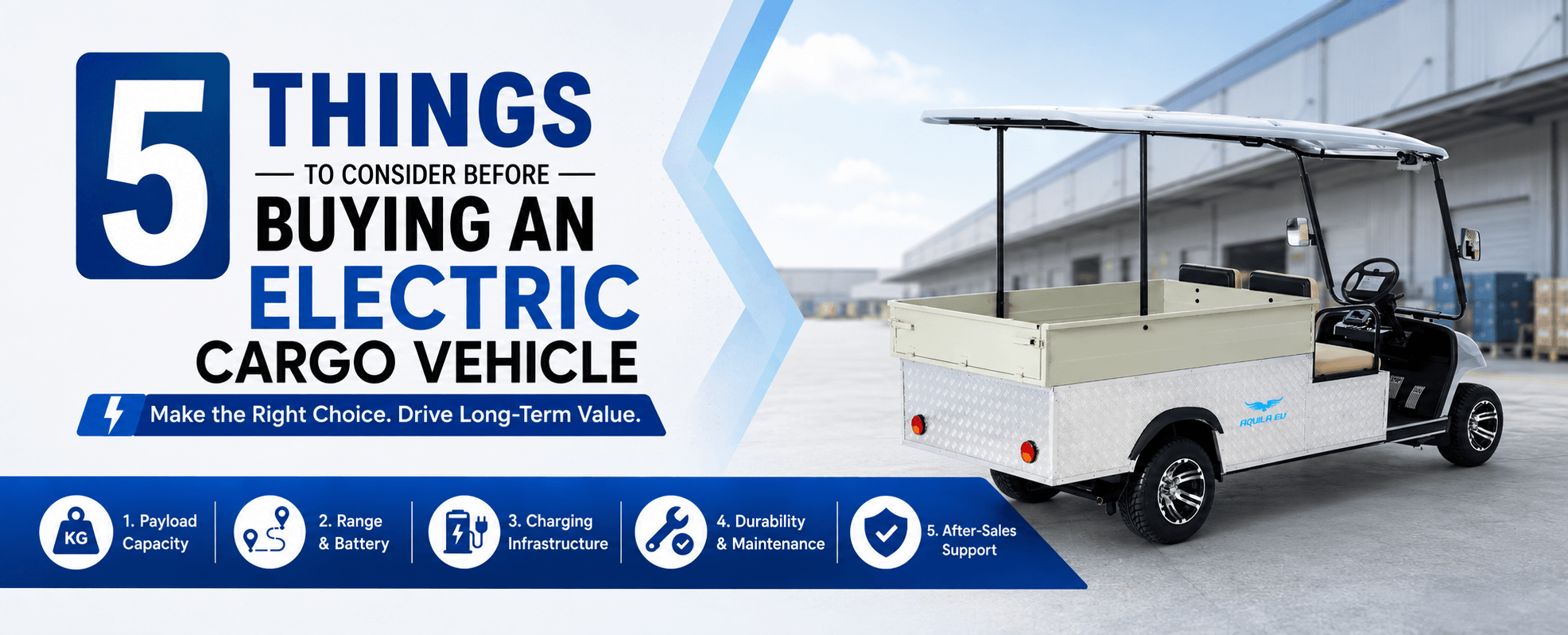
An electric cargo vehicle can be a powerful way to cut fuel costs, meet sustainability goals, and improve last-mile efficiency but only if you choose the right vehicle for your business. In this electric cargo vehicle buying guide, we’ll walk through 5 critical things to consider before buying an electric cargo vehicle, so fleet owners and logistics managers can protect their ROI and avoid costly mistakes.
This article is tailored for fleet owners, logistics companies, e-commerce businesses, last-mile delivery providers, MSMEs, retail and distribution companies, and commercial vehicle buyers evaluating an electric commercial vehicle or electric delivery vehicle for their operations.
Before diving into the buying checklist, it’s important to understand why electric cargo vehicles are becoming the preferred choice across many industries.
Businesses are switching to electric cargo vehicles because they deliver a combination of lower operating costs, predictable performance, and environmental compliance. Compared to traditional diesel or petrol-based commercial vehicles, an EV cargo vehicle offers:
Electricity is significantly cheaper than diesel or petrol on a per-kilometre basis. For high-utilisation fleets, this translates into substantial savings on running costs over the vehicle’s lifetime.
Electric drivetrains have fewer moving parts, no engine oil, and fewer wear-and-tear components. This reduces the frequency and cost of maintenance, which is critical for fleets that operate daily.
For businesses operating inside campuses, residential areas, tech parks, resorts, factories, or airports, zero air pollution and low noise levels are major advantages. Electric commercial vehicles help meet ESG goals and regulatory requirements related to emissions.
For use cases like in-campus logistics, last-mile delivery, factory-to-warehouse transfers, or resort/hotel cargo movement, electric cargo vehicles deliver reliable performance without the complexity of long highway routes.
For example, a large e-commerce company operating in multiple city hubs might replace a part of its diesel fleet with electric delivery vehicles for last-mile drops within a 10–20 km radius. Over time, they see lower fuel spend, fewer breakdowns, and better alignment with government incentives and sustainability targets.
With this context in mind, let’s look at the 5 things to consider before buying an electric cargo vehicle so you can make a practical, ROI-driven decision.
When evaluating an electric cargo vehicle, treat it as a business asset not just a purchase. The right choice should improve operational efficiency, reduce total cost of ownership, and support long-term growth.
Here are the five key considerations every business should evaluate:
Each of these factors directly impacts your fleet’s performance, reliability, and profitability. The sections below break them down in detail with examples and practical checklists.
For any electric cargo vehicle buying guide, battery range is often the first thing buyers worry about and for good reason. If the vehicle cannot complete your daily routes without disruption, it will affect deliveries, productivity, and customer satisfaction.
Start by mapping your typical operations:
For example, a last-mile delivery provider doing 60–80 km per day across city clusters needs a different range profile than a factory using an EV cargo vehicle only inside its premises for 10–20 km of movement daily.
Manufacturers usually specify a claimed range (e.g., 80–120 km per charge). Real-world factors such as payload, gradient, stop-and-go traffic, and driving style can reduce this range.
Key points to assess:
A fleet owner operating inside a large industrial campus might prioritise fast-charging Lithium-ion batteries that can handle multiple short trips with frequent loading and unloading, without requiring mid-day charging breaks.
Battery range is only half the story. Charging time and infrastructure determine how efficiently you can keep your electric cargo vehicles on the road.
Consider:
If your vehicles primarily operate inside a campus, for example, you may plan for overnight charging and quick top-ups during low-activity hours. E-commerce and logistics companies with multiple hubs often design dedicated charging bays to avoid bottlenecks.
Choosing the wrong payload capacity is one of the most common mistakes buyers make, and it directly affects both safety and ROI.
Start with a realistic analysis of what you carry:
For logistics companies and e-commerce businesses, payload can vary widely across seasons (festive sales, promotions, B2B bulk orders). For MSMEs and factories, payload may be more predictable but heavier per trip.
Under-specifying payload means:
Over-specifying payload means:
The goal is to match your electric commercial vehicle’s payload capacity to actual requirements, with a buffer for peak loads.
| Use Case | Typical Payload Need | Recommended Focus |
|---|---|---|
| In-campus factory logistics | Medium to heavy (materials, parts) | Robust chassis, higher payload rating |
| Last-mile e-commerce delivery | Light to medium (parcels) | Balanced payload + good range |
| Resorts/Hotels internal cargo movement | Light (luggage, supplies) | Moderate payload + manoeuvrability |
| Tech parks, airports, railway stations | Medium (equipment, baggage) | Payload + safety + stable performance |
A common concern among buyers is the high upfront investment in an electric cargo vehicle. However, focusing only on purchase price can be misleading. What matters is Total Cost of Ownership (TCO).
TCO includes:
Consider a simple model:
Many businesses find that while the electric cargo vehicle has a higher upfront cost, operating costs are significantly lower, and the breakeven point (where EV becomes cheaper overall) can be reached in a few years, especially in high-utilisation fleets.
An often overlooked part of TCO is downtime. If a vehicle frequently breaks down or has no quick service support, the indirect cost in missed deliveries or disrupted operations can be substantial.
An EV cargo vehicle with reliable components, strong build quality, and a responsive service network typically offers higher uptime, which improves ROI.
In many markets, electric commercial vehicles attract:
For example, a retail and distribution company seen using electric cargo vehicles for in-city distribution can enhance its brand as environmentally responsible, which can support marketing and stakeholder relations.
Even the best electric cargo vehicle needs dependable maintenance and after-sales support. Many buyers worry about limited service coverage, long response times, and lack of trained technicians.
Key questions to ask any manufacturer or supplier:
For a fleet that operates across multiple campuses, cities, or industrial parks, multi-location service support and a quick response time (e.g., within 48 hours) can be crucial.
Check:
Electric vehicles behave differently from engine-based vehicles. To maximise efficiency and battery life:
The final, and often most critical step in buying an electric cargo vehicle is selecting the right manufacturer. A reliable partner reduces risk, improves uptime, and ensures you get consistent support across the vehicle’s lifecycle.
Consider:
The more diverse the deployment history, from factories and temples to railway stations and airports, the more confidence you can have in the manufacturer’s ability to handle varied operational environments.
Key parameters:
A good manufacturer is more than just a vehicle provider; they should act as a long-term mobility partner.
Check if they offer:
For commercial vehicle buyers, logistics companies, and MSMEs, choosing a manufacturer with a proven reputation for reliability, quick service, and robust support is often the difference between a high-performing electric fleet and a struggling one.
Choosing an electric cargo vehicle is not just about joining the EV trend, it’s about making a strategic business decision that impacts your costs, operations, and brand over the next several years.
By focusing on these 5 key considerations before buying an electric cargo vehicle:
…you can ensure that your electric commercial vehicle or electric delivery vehicle delivers maximum ROI, reduced operating costs, and reliable performance for your business.
For fleet owners, logistics companies, e-commerce businesses, last-mile delivery providers, MSMEs, and commercial buyers, a well-chosen EV cargo vehicle is not just a sustainable choice, it is a smart, financially sound move that positions your business for the future of mobility.
When you evaluate options, use the checklists in this guide, compare models carefully, and prioritise long-term value over short-term savings. That’s how you turn an electric cargo vehicle from a promising idea into a high-impact asset for your operations.



 +91 91769 99900
 info@trielectric.in